
Blog
Why Minimalist Rooms Still Need Ambient Lighting

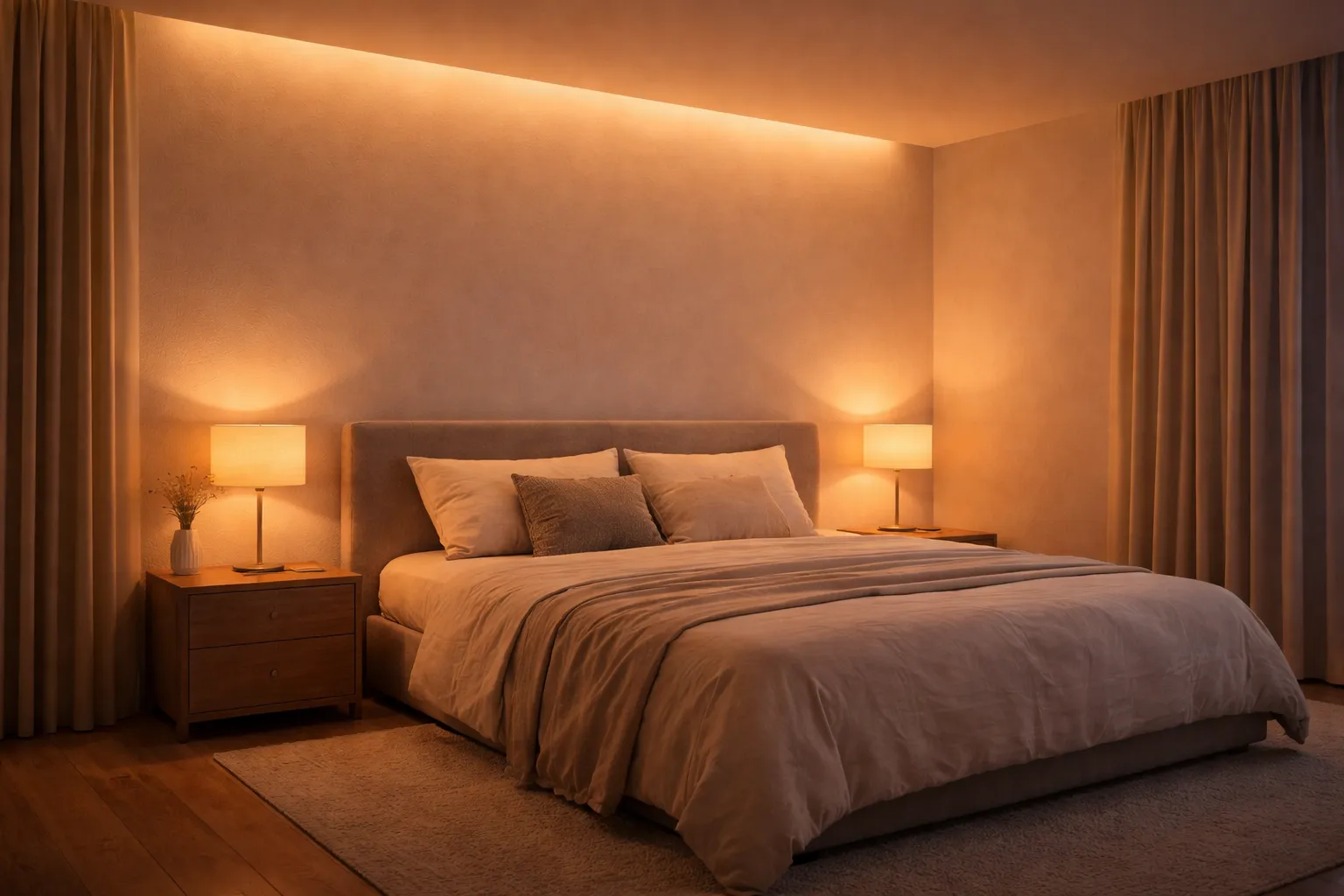
Minimalism removes visual noise, but it does not remove the need for atmosphere. In fact, the fewer decorative elements a room has, the more important lighting becomes. In a busy room, texture, color, décor, and furniture do part of the emotional work. In a minimalist room, light has to do much more of it.
That matters because lighting is not a small category anymore. The global lighting market was valued at USD 142.49 billion in 2025 and is projected to keep growing, with LED lighting holding the largest revenue share and indoor lighting remaining a major application category.
A shopper searching this topic is usually not asking whether a minimalist room can physically function without ambient light. They are asking why their clean room still feels cold, empty, or strangely unfinished. That is the real retail meaning behind the keyword.
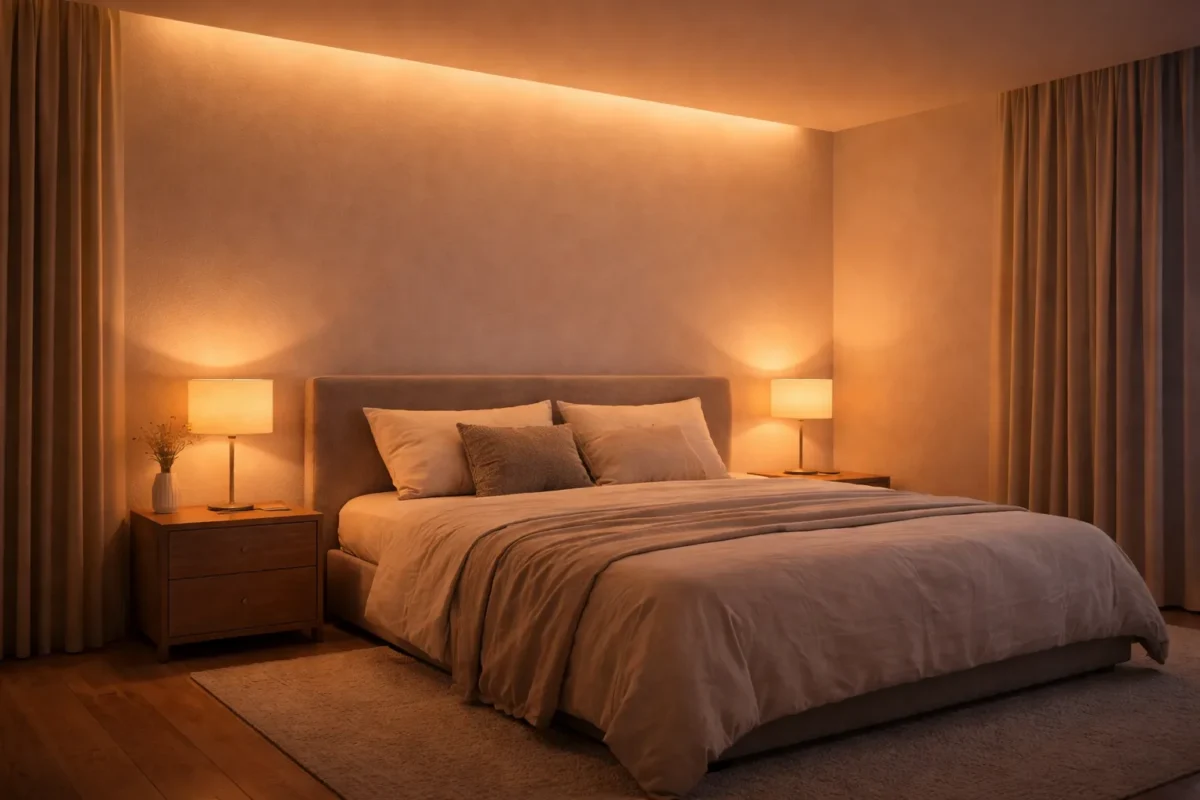
Search intent behind “Why Minimalist Rooms Still Need Ambient Lighting”
The search intent here is informational with strong commercial investigation value. The user usually falls into one of three groups. The first group is building or redecorating a minimalist bedroom, living room, or gaming setup and wants it to feel warm instead of sterile. The second already has a minimalist space and feels disappointed that it looks flat at night. The third is comparing lighting products and wants to know which ones will preserve a clean aesthetic without cluttering the room.
This makes the keyword commercially valuable because the user is already thinking beyond brightness. They are thinking about mood, finish, and spatial quality. They are close to buying, but they do not want “more stuff.” They want the room to feel better while still looking simple.
Minimalist design makes lighting more important, not less
A common mistake is assuming that minimalist rooms need less lighting because they contain fewer objects. In reality, minimalist interiors usually need more intentional lighting because there are fewer visual distractions to hide bad decisions.
When a room has limited décor, the eye notices proportions, shadows, edges, surface quality, and negative space much more clearly. If the only light source is one bright ceiling fixture, the room can feel flat and exposed. If the lighting is layered well, the same room can feel calm, premium, and architecturally complete.
This is exactly why the U.S. Department of Energy separates residential lighting into ambient, task, and accent uses. Ambient lighting provides general illumination, task lighting supports specific activities, and accent lighting enhances visual features or aesthetics. Minimalist rooms often fail when they skip that first layer or rely on one harsh source to do all three jobs at once.
Ambient lighting is what turns “empty” into “intentional”
One of the biggest risks in minimalist interiors is visual emptiness. A room can look clean in daylight but emotionally thin at night. That is usually not a furniture problem. It is a lighting problem.
Ambient lighting fills space without cluttering it. It softens transitions between walls, furniture, and open areas. It helps surfaces feel deliberate rather than blank. In minimalist design, that is crucial, because the room cannot rely on heavy decoration to create warmth.
Good ambient lighting also protects minimalism from becoming clinical. A white wall under harsh overhead light can feel cold. The same wall under softer indirect lighting can feel expensive and serene. The object did not change. The perception did.
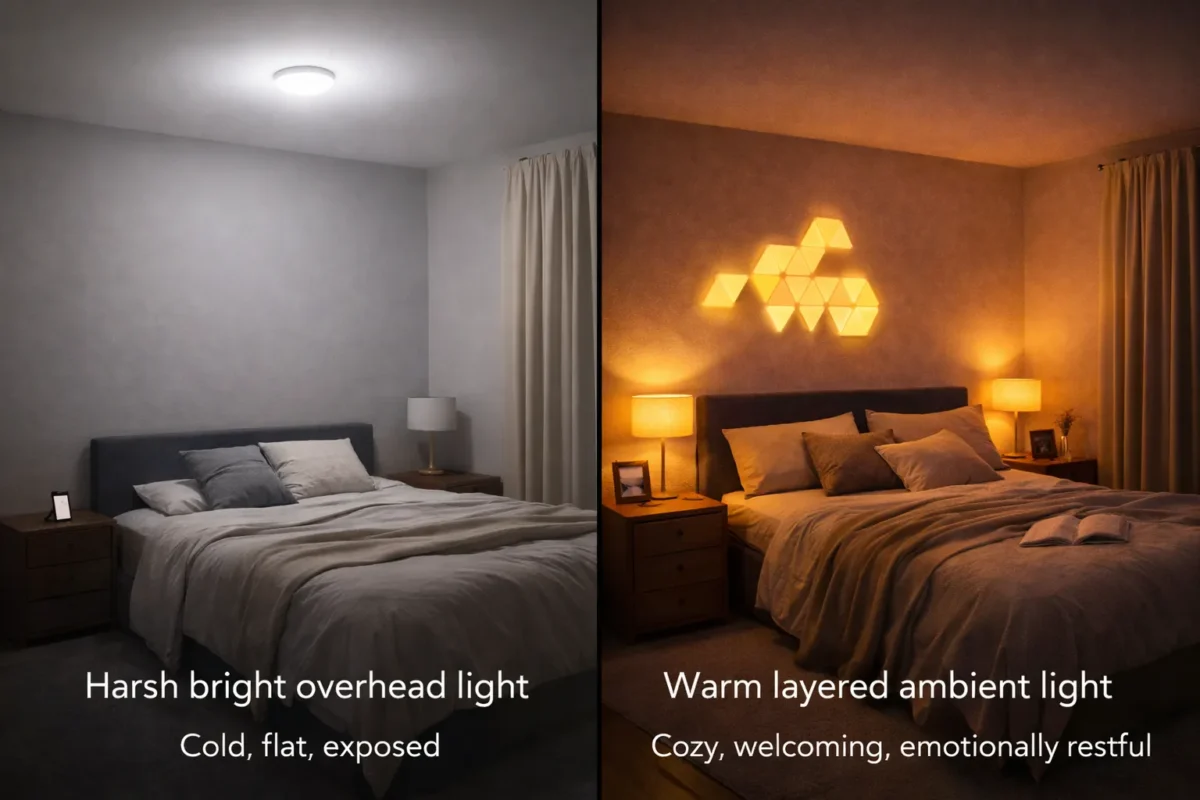
Why overhead light alone often ruins a minimalist room
Many minimalist rooms look worse at night because they depend too heavily on one ceiling light. That approach is efficient, but it often works against the emotional goals of minimalism.
Flat overhead illumination tends to erase depth. It can make clean lines feel severe rather than elegant. It can also expose every surface equally, which removes hierarchy and makes the room feel more like a showroom than a living space.
The Department of Energy’s consumer lighting guidance emphasizes that light should be matched to how a room is used, not treated as a one-size-fits-all quantity problem. That matters in minimalist rooms because a single bright light source often solves visibility while damaging atmosphere.
Minimalist rooms still need warmth, especially at night
A minimalist room should feel calm, not emotionally distant. That distinction becomes especially important in the evening.
Sleep-focused guidance from Sleep Foundation notes that low illuminance and warm color temperature may help with relaxation and getting into the right mindset for sleep, while warmer hues are generally preferable to cooler light before bed. That does not mean every minimalist room needs amber lighting everywhere, but it does mean warm ambient scenes are often better aligned with evening comfort than bright cool white light.
This is why many minimalist rooms that look good on Pinterest still feel disappointing in real life. Visually they are clean, but emotionally they are underlit in the wrong way or lit too harshly. The result is not peaceful minimalism. It is sterile minimalism.
The real job of ambient lighting in a minimalist room
Ambient lighting in minimalist interiors does more than help people see. It performs five jobs at once.
First, it gives the room emotional temperature.
Second, it adds depth without adding clutter.
Third, it helps negative space look intentional instead of empty.
Fourth, it supports daily transitions from day mode to evening mode.
Fifth, it makes fewer objects look more valuable.
That last point matters a lot in retail. Minimalist buyers usually own fewer visible items, so each one carries more visual weight. Better lighting makes those pieces feel more curated and more premium.
Where minimalist rooms usually go wrong
The first mistake is relying only on the ceiling fixture. This creates brightness, but not atmosphere.
The second mistake is choosing lighting that is technically minimal but visually harsh. A thin fixture can still create ugly glare.
The third mistake is confusing “clean” with “cold.” Minimalist design does not require emotionally empty lighting.
The fourth mistake is ignoring evening use. A room may look perfect during the day and fail completely after sunset.
The fifth mistake is removing too many secondary light sources in the name of simplicity. In practice, one hidden strip behind a headboard, one discreet floor lamp, or one soft wall glow often makes the room feel more complete while keeping the minimalist look intact.
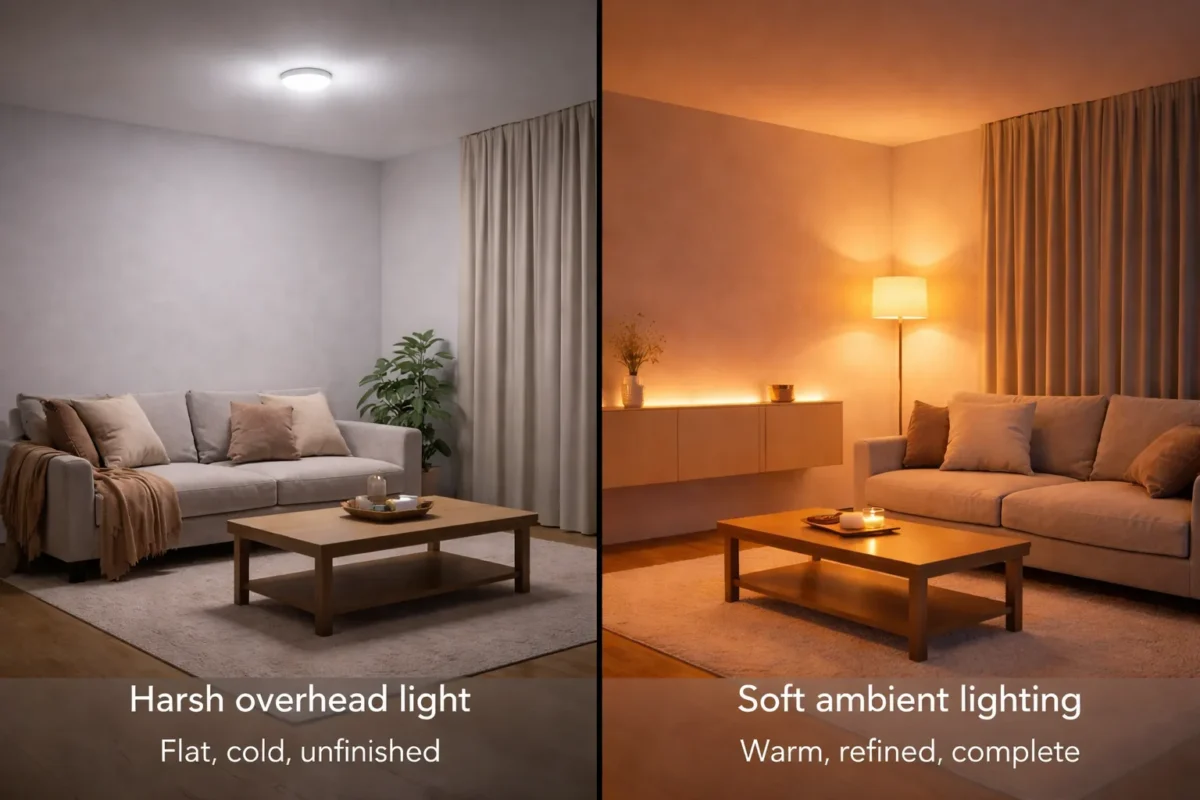
What ambient lighting looks like in a minimalist room
In a minimalist room, ambient lighting should usually be quiet, indirect, and visually integrated. It should not compete with the room. It should shape it.
That often means:
- a soft wall wash behind a bed or sofa
- concealed LED glow under shelving or cabinetry
- a simple floor lamp with diffused warm output
- a clean bedside lamp with low glare
- a wall feature light that doubles as subtle décor
The goal is not to make the room busier. The goal is to make the emptiness feel intentional and livable.
A practical retail table: minimalist lighting mistakes and better fixes
| Common mistake | Why it hurts the room | Better fix |
|---|---|---|
| Only one overhead light | Flattens the room and removes depth | Add one soft secondary ambient source |
| Cool white light at night | Makes the room feel clinical | Use warm evening scenes or warm bulbs |
| No lighting below eye level | Room feels exposed and rigid | Add bedside, floor, or wall-level glow |
| Hidden décor but visible glare | Breaks the calm look | Use diffused or indirect lighting |
| “Less is more” taken too far | Room feels empty, not refined | Keep one or two integrated ambient layers |
What shoppers should look for when buying ambient lighting for a minimalist room
Buyers who care about minimalism usually want products that do not visually dominate the room. That means the best options are often simple in shape but strong in effect.
They should look for:
- low-glare designs
- warm or adjustable color temperature
- dimming control
- indirect or diffused output
- finishes that blend into the room
- lights that serve both daytime aesthetics and nighttime mood
This is one reason smart lighting keeps expanding as part of the broader lighting market. Smart systems let users change brightness, color temperature, and schedules through apps or voice assistants, which helps one minimalist room serve multiple moods without adding extra visible objects.
Real-world minimalist logic: fewer objects means each light matters more
In richly decorated spaces, lighting can be forgiven for being average because the room has other things creating atmosphere. In minimalist rooms, average lighting is much more obvious.
That is why ambient lighting is not optional in good minimalism. It is part of the architecture of the feeling. Without it, the room may look tidy but fail emotionally. With it, the same room can feel calmer, warmer, and more expensive.
From a retail perspective, this is the most important takeaway. Minimalist customers are not asking for more decoration. They are asking for better perception. Ambient lighting is often the cleanest way to deliver it.
Conclusion
Minimalist rooms still need ambient lighting because simplicity does not automatically create comfort. Clean lines and open space can feel elegant during the day, but without the right light, they often feel cold and unfinished at night.
Ambient lighting gives minimalist interiors what furniture and décor deliberately do not: softness, depth, warmth, and emotional balance. It helps negative space feel intentional, helps surfaces feel refined, and helps the whole room feel lived in rather than merely styled.
That is why this topic matters in retail. People searching it are not just asking about design theory. They are asking how to keep minimalism beautiful without letting it become lifeless. The best answer is not more objects. It is better light.